If you happen to stumble across Xiaomi’s stand at MWC 2026 expecting another predictable phone refresh, you might be in for a surprise.
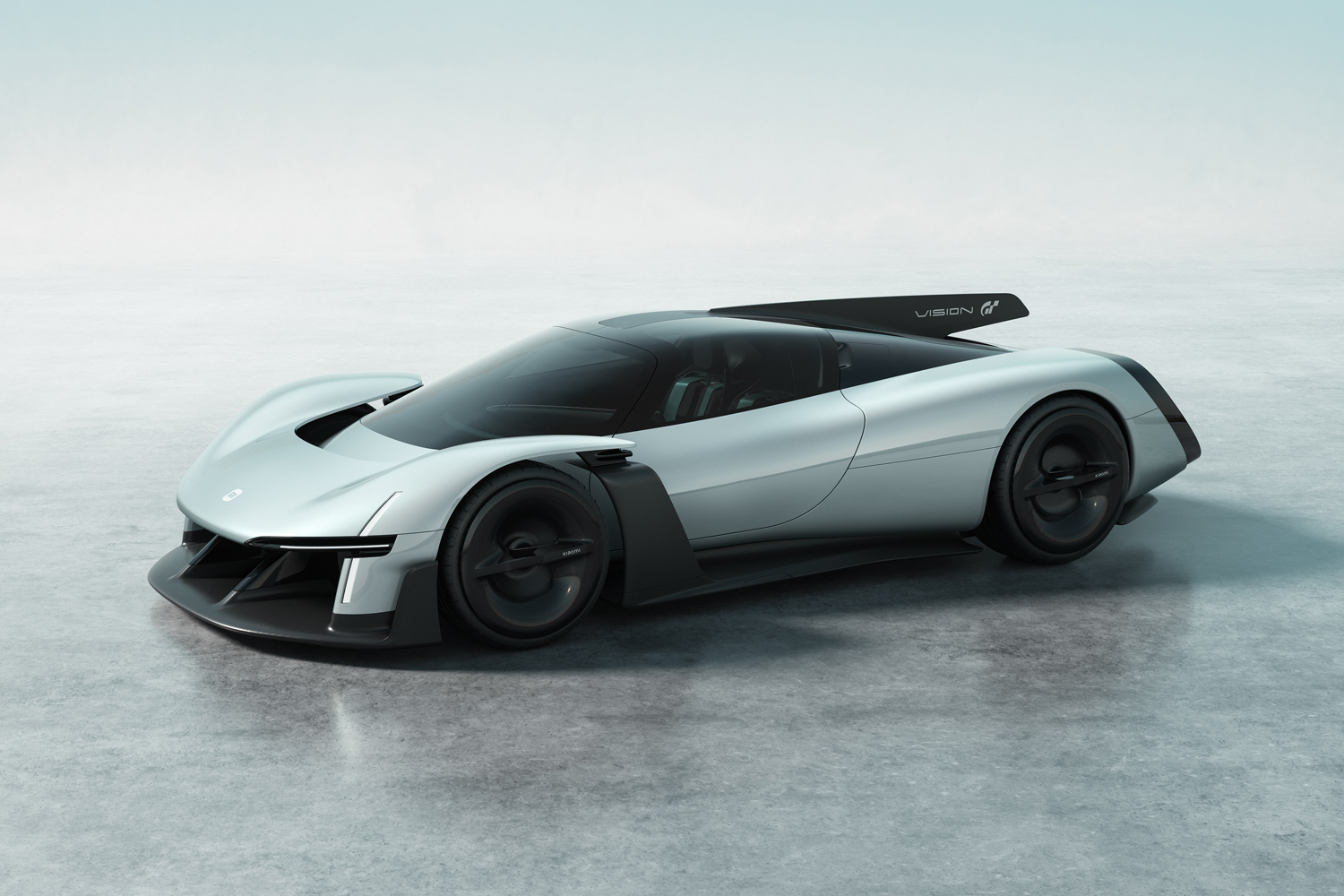
Parked front and centre is the Xiaomi Vision Gran Turismo – a low-slung electric hypercar concept that looks like it’s driven straight out of a PlayStation and onto the Barcelona show floor.
Originally created for the long-running Gran Turismo franchise after an invitation from series creator Kazunori Yamauchi, the Vision GT has now made its physical world debut. And it’s every bit as dramatic in the metal as you’d hope.
Xiaomi leans into what it calls a “Sculpted by the Wind” design philosophy, which translates to a teardrop-shaped cockpit, sculpted aerodynamic channels, an Active Wake Control System, and a distinctive halo-shaped taillight.
The Active Wake Control System is a matrix of micro-perforations surrounding the taillight that actively guides airflow using real-time vehicle data, pushing turbulence away from the rear without interrupting the car’s clean surfaces.
Then there are the Accretion Rims – vortex-shaped wheel covers that sit flush with the tyre surface, with turbine fins inside that actively pull air to cool the brakes. A magnetic system keeps the wheel cover stationary while the wheel rotates, reducing aerodynamic drag and creating a floating visual effect.
Rather than relying on add-on spoilers, the car is also shaped for aerodynamic balance from the outset, and through simulated testing, Xiaomi says the concept achieves a drag coefficient of 0.29, downforce of negative 1.2, and an aerodynamic efficiency rating of 4.1.
It’s clearly a concept, but it’s also a statement – a glimpse at how Xiaomi imagines the future of electric performance design within its wider ambitions.
Inside, things get even more playful. Xiaomi describes the cabin as a “Sofa Racer” interior. Aptly named, the idea, according to the company, is an experience akin to racing on a sofa. Based on appearance alone, it actually looks rather comfortable.
Elsewhere, the whole ensemble also integrates features like Xiaomi Pulse – an intelligent assistant built into the dashboard that wraps 360 degrees around the driver, reading the environment and the driver’s state, and communicating through light and sound.
It works alongside Xiaomi HyperVision, a dynamic interface built on Xiaomi Hyper OS that adapts depending on driving mode, whether that’s stripped-back track telemetry or immersive navigation. It’s presented as part of the Vision GT’s cabin experience, and is tied into Xiaomi’s “Human × Car × Home” smart ecosystem.
The concept appears alongside the more obtainable all-electric Xiaomi SU7 Ultra saloon, showcasing the company’s growing ambitions on the road – though the Vision GT pushes that design exploration further into hypercar territory.
Naturally, phones remain a major part of Xiaomi’s MWC story, too. The company has unveiled the Xiaomi 17 Ultra and Xiaomi 17 for global markets – the first flagship developed under its upgraded strategic co-creation model with Leica.
On the camera side, Xiaomi says the 17 Ultra introduces a new-generation optical system, including a newly developed 1-inch LOFIC main camera sensor, and what it describes as the industry’s first Leica APO-certified optical telephoto zoom lens for mobile imaging.
The focus is on improvements to night photography, high-contrast detail accuracy, and telephoto performance. Given the fact that our review found it to deliver some of the best camera performance of any smartphone we’ve tested, it seems it delivers on all fronts.
Also showcased is the Leica Leitzphone powered by Xiaomi, designed directly in collaboration with Leica’s design team. Drawing inspiration from Leica’s M-series cameras, it features a dual-tone back panel combining a leather-textured finish with a matte surface, giving it a more camera-like aesthetic and improved grip.
Beyond the headline hardware, there’s plenty of ecosystem messaging in the background as well. But at a show packed with slabs of glass and mostly incremental upgrades, an ambitious hyper concept cuts through the noise rather nicely.
- Read more: The Vivo X300 Ultra is going global. Here’s why rivals should be worried
