Qualcomm may be synonymous with the tech inside smartphones, but it continues to push forward with wearables, too. Most smartwatches have the company’s tech inside and the latest Snapdragon Wear Elite platform is designed to bring AI interactions to your wrist and beyond.
The company was on stage at Mobile World Congress 2026 to announce that Wear Elite will be in products from Google, Motorola and Samsung incliuding the next-gen Galaxy Watch.
Products featuring the new tech will be “available in the next few months”, says Qualcomm and I’d expect a next-gen Galaxy Watch Ultra and Galaxy Watch 9 to debut in July or August.
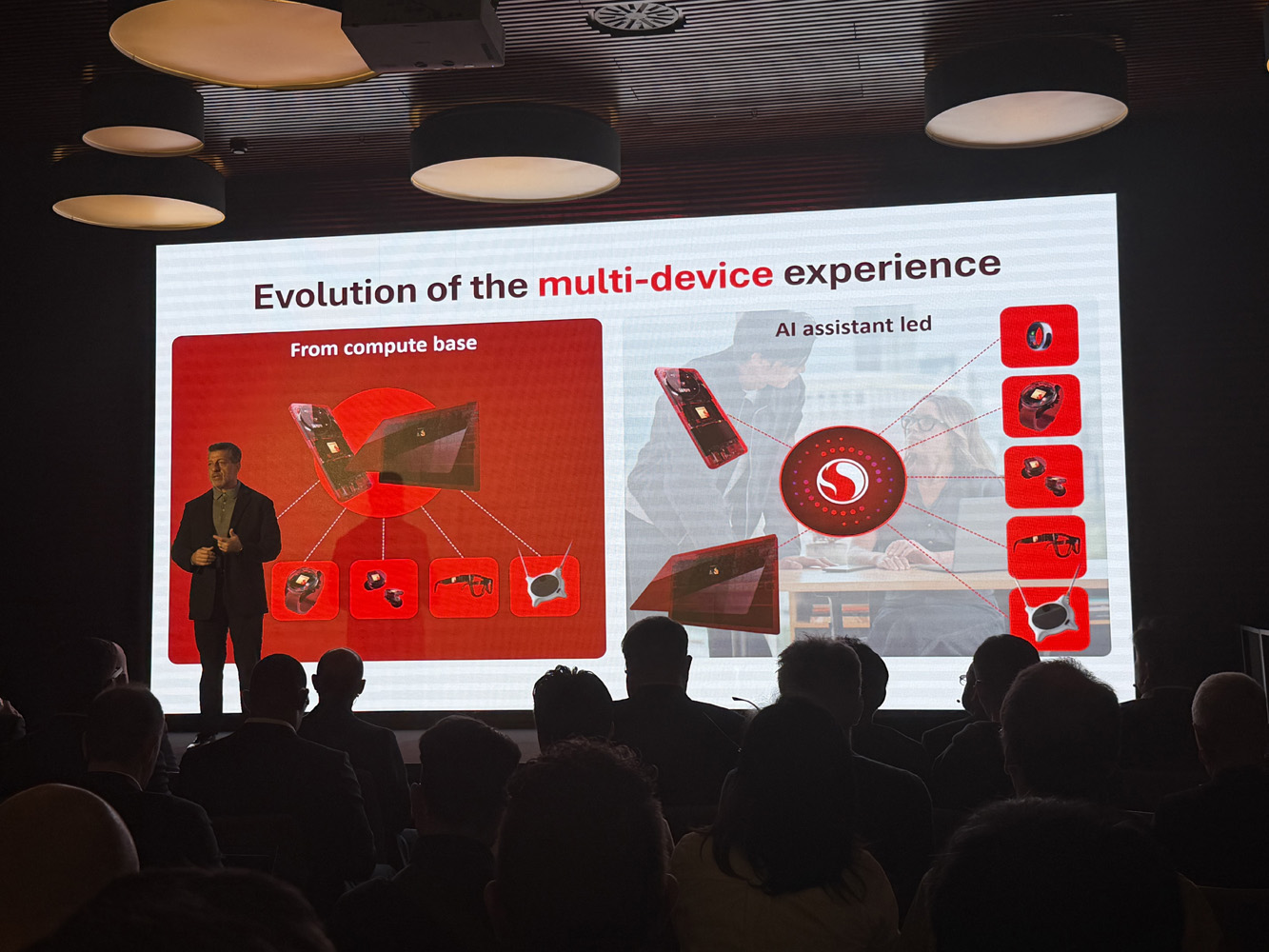
The tech can be used in all kinds of wearables of course – it’s not all about watches and we’ll see more AI assistant pins, smart glasses and more appear over the coming years.
The new platform promises a bunch of performance improvements and support for the latest standards, including 5G, Micro-Power Wi-Fi and Bluetooth 6.0, but perhaps the most interesting is in terms of battery life, which is 30% improved with rapid charging that can juice up a watch to 50% in around 10 minutes.
More personal devices
Qualcomm is keen to pitch these next-gen wearable devices as part of a new ‘era of personal AI’ as the company’s Ziad Asghar explained during an event I attended at Mobile World Congress.
Yeah, so I think one thing is very clear. AI is the new UI. We’ve seen this before where the mouse and keyboard enabled the PC. Touch enabled the smartphone. AI is enabling all of these new devices. That means you basically need a very different kind of device. We’ve already seen great traction with smart glasses and the number of people who are using [them].
“I always like to say that these devices should give you a superpower. [They] should allow you to speak a language you don’t speak. It should allow a student to be able to get an answer to their homework.
“Your watch, it might be telling you your heart rate, it’s telling you your activity level, it’s telling you whether you’re sitting or you’re walking or running. Can you imagine if you can bring in all of this context into generative AI?”
“That’s where you get full, personalized AI. And that’s why I’m so excited about [new wearable devices], because this is how you get generative AI to be personal to each and every person. And these new emerging [device designe] are so natural”. Asghar continues. “Your body is like prime real estate to have these types of devices [and] you can comfortably wear them. You have connectivity on parts of your body that are natural [places to have them] like the wrist or the chest.”
We also heard from Google and Motorola at the event, where they talked about the upcoming generation of wearables.
“With Wear OS, we are reimagining the smartwatch experience and moving from an operating system to an always with you intelligent system that understands and works for you,” explained Bjørn Kilburn, head of Google’s Wear OS.
“The Snapdragon Wear Elite platform opens new possibilities, delivering the performance, battery life and connectivity essential for the next generation of Wear OS.”
Francois LaFlamme from Motorola added: “The shift toward Personal AI depends on a foundation that can balance on‑device intelligence, sensing, connectivity, and more efficient compute, so these devices can move with you, learn from you, and support more intuitive interactions throughout the day.”
- More humanoid robots are coming and there are now special chips for them, too
