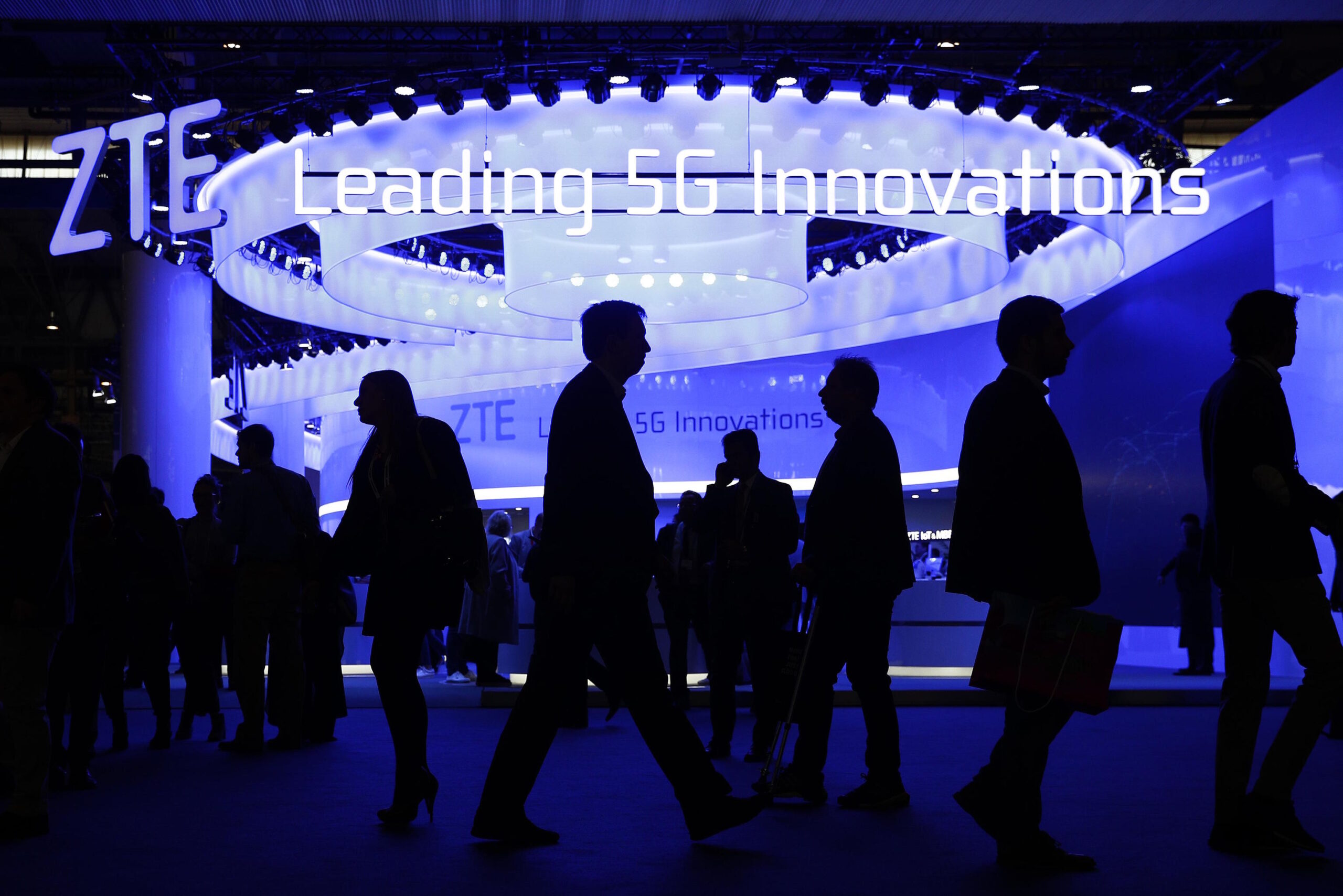
The fair expands to areas where major European players are testimonial despite keeping Barcelona as its venue.
For years now, the nearly 100,000 attendees who gather at the Mobile World Congress are not seeking the “latest mobile phone.” Although the event will feature device announcements and will be the first opportunity to experience newly launched ones like the new Samsung, the fair has long ceased to revolve around technology. In fact, the most anticipated announcements of the week will probably come from Apple, which never attends the event.
Instead, in an environment of scattered attention, the fair organized by GSMA has been focusing on major debates and the ability to be a meeting point for thousands of companies worldwide in an increasingly broad scope. Thus, what started as a telecommunications fair for manufacturers and operators now faces a new edition in Barcelona with artificial intelligence and the space sector at the center of its proposals.
This choice highlights Europe’s lagging position. The old continent first lost the throne of mobile phones and then that of connectivity. Now, the new technological frontiers also seem distant, as evidenced by the main speakers at the event. Beyond the top executives of European telcos (partners of the event’s organizing company), in all major debates, the speakers are usually American or Asian, not European.
Notable figures include executives from Elon Musk’s space empire, with the president of SpaceX, Gwynne Shotwell, and the vice president of Starlink, Michael Nicolls, as well as the intervention of actor Aaron Paul, famous for his role in Breaking Bad, the president of Qualcomm, Cristiano Amon, the president of the OpenAI Council, Bret Taylor, the CEO of the smart ring startup Oura, Tom Hale, and the president of Blizzard, Johanna Faries.
Whether discussing responsible technology, artificial intelligence, new devices that can be integrated into our daily lives, or how culture is being transformed by digitalization, the prominent voices consulted are rarely European, apart from contributions from operators.
In this context, it is not surprising that one of the central debates on the first day is the need to achieve European technological sovereignty. Alongside the European Commissioner for Technological Sovereignty, Henna Virkkunen, the president of Telefónica, Marc Murtra, the CEO of Eutelsat, Jean François Fallacher, and the president of Deutsche Telekom, Tim Höttges, will discuss the continent’s position.
Last year, Höttges delivered the harshest intervention, calling for the creation of a “DOGE” (Musk’s agency to minimize the nature of government) to avoid being accountable to 270 different regulators. The situation has not significantly improved in a year, although it has been a very good year for European operators in the stock market. In fact, the new European network law has been disappointing, and the Cybersecurity Law has been a direct debacle for the hopes of telecommunications operators.
Brussels estimates that European operators would have to invest €21 billion over five years to remove all equipment from Chinese suppliers that could pose a security risk under the Commission’s criteria. Von der Leyen has already received a letter from all companies in the sector warning of the problem, as privately, every company acknowledges that it is “impossible” to carry out this plan without seriously damaging these companies’ ability to deploy new technologies.
The other central element is mergers, the longstanding crusade of telecommunications operators. They will not have the opportunity to address this in person to Teresa Ribera, the Competition Commissioner, who canceled what was supposed to be her first public appearance at the event (last year she only attended closed-door meetings) amid a debate on European competitiveness.
Last week, Marc Murtra, president of Telefónica, welcomed the pro-European champions’ remarks made by António Costa, President of the European Council, in recent weeks. He also acknowledged that regulatory changes were a requirement to carry out the consolidation operations that the group wants to undertake in Europe.
Nevertheless, rumors of accelerated negotiations with 1&1, the fourth German operator, to merge their businesses, boosted this group’s shares by almost 9%, indicating that the market expects someone to dare to test the new prevailing climate with the new Commission.
Another area where thousands of eyes (and feet) will be focused is on the city’s transport. The speed restrictions of the AVE and the situation of Rodalies strain two key routes for attendees arriving at the event. Companies like Vueling have offered enhanced coverage with 500,000 seats in Barcelona.
Overall, Barcelona Airport estimates that during the event week, there will be around 9,100 flights soaring through the city’s skies, compensating for the added difficulty in reaching Barcelona but not for internal mobility.
The sensational aspect will be the Israeli presence after the country announced its boycott of the event.
Don’t miss out on all our news at www.mundoamerica.com.
