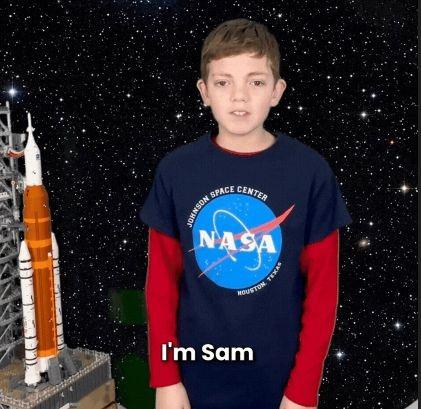
Deaf Eastbourne teenager Sam Callaghan is calling for action and investment in the life transforming therapy that supported him to listen and speak a year after meeting Government Minister Stephen Kinnock MP.
With World Hearing Day (3 March) fast approaching, Sam says another year of Government inaction is unacceptable — and is speaking out again to ask why nothing has changed.
“I told the Minister how much early support through Auditory Verbal therapy helped me — I just want other deaf children to have that chance,” Sam said.
Around 80% of deaf children, like Sam, who spend at two years or more on an Auditory Verbal therapy programme achieve at least age-appropriate spoken language and the majority attend mainstream school. But currently more than 85% of the approximately 7,200 deaf babies and pre‑school children in the UK who could benefit are unable to access the family-centred programme.
To mark World Hearing Day Sam is using his voice to question why almost 12-months on from the meeting in Westminster he and his family are still waiting for Government action to ensure more deaf babies can access Auditory Verbal therapy which has allowed him to have the same opportunities as his hearing peers.
Sam (14) who loves space is well on his way to achieving his ambitions to become an astrophysicist, in part thanks to the Auditory Verbal therapy programme he attended as a baby. The early intervention approach supports deaf babies and children like Sam to make sense of the sound they receive through their hearing technology, like cochlear implants and hearing aids, and develop their spoken language so they can learn to talk like their hearing friends and thrive at school and in life.
Sam said: “When I met Stephen Kinnock last year I was really excited to talk about my love of science and space and show him what a difference Auditory Verbal therapy has made to me but that meeting was nearly a year ago and nothing has happened.”
Joanna Callaghan, Sam’s mum, who joined her son at the Westminster meeting in March 2025, added: “It really is no exaggeration to say that Sam’s life, and ours as a family, was transformed thanks to Auditory Verbal therapy. It is evident to see as it was for Stephen Kinnock, the difference it has made to Sam who is thriving at school and in life and dreaming of a career in science and even going into space.
“But here we are approaching another World Hearing Day with no Government update or commitment to ensure that more deaf children like Sam can have the opportunity to access an Auditory Verbal therapy programme.”
Auditory Verbal UK is amplifying it’s Hear Us Now campaign for World Hearing Day and calling on UK governments to take action and issue national guidance for Auditory Verbal therapy. This guidance would set out a clear, consistent framework for delivering this evidence-based approach within local publicly funded service to young deaf children whose families want them to learn to listen and talk, ensuring equality of access and a sustainable approach.
AVUK Chief Executive Anita Grover said: “The theme of World Hearing Day 2026 is ‘hearing care for all children’ and we are urging the UK Government to come good on conversations we had this time last year to ensure all deaf children, whether their families wish to use spoken language, sign language or both, can access vital early, effective support to develop their language and communication skills.
“For families who want their deaf child to learn to listen and speak, Auditory Verbal therapy is transforming outcomes and opportunities, as Sam is proving, but we need to see an end to the current inequality where fewer than 15% of deaf children under five are able to access an Auditory Verbal therapy programme.
“Issuing national guidance will mean a huge step forward in ending the postcode lottery currently facing families with deaf children as they try and access early and effective support to allow their children to have the same opportunities as their hearing peers.”
For more information visit www.avuk.org
